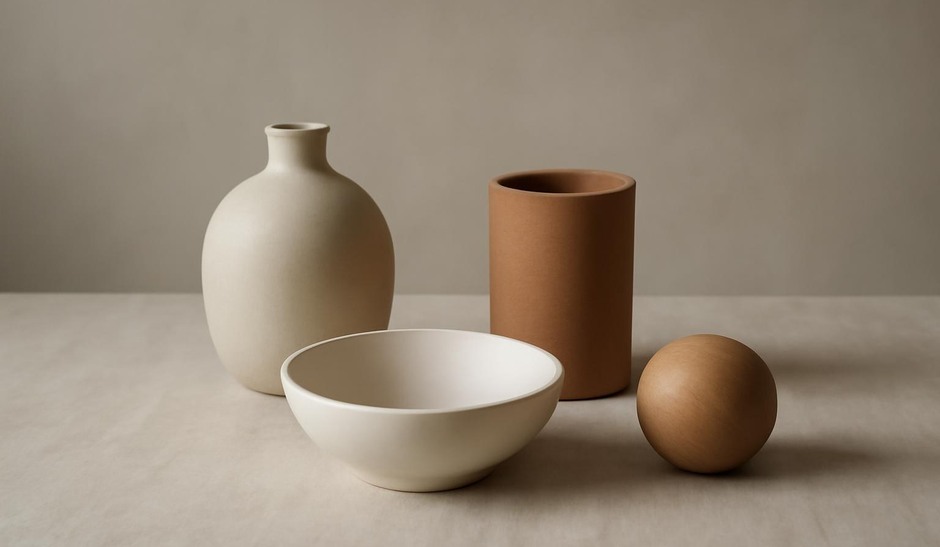
Composition Strategies for Still Life: Arranging with Purpose
Start with a Simple Limitation
Compositional clarity often emerges from constraints. Begin with a small number of objects and a limited palette or value range. Fewer elements allow attention to focus on relationships of shape, edge and spacing. A restricted setup highlights how small changes in placement alter the visual rhythm.
Establish a Focal Area
Decide where you want the eye to rest. A clear focal area can be supported by stronger contrast, a warmer colour, or a sharper edge. Anchor that focal point with surrounding shapes that lead the eye gently toward it rather than compete with it.
Balance and Visual Weight
Visual weight depends on size, value, colour and texture. Balance is not necessarily symmetrical. Counter a large, light object with a small, dark element or a textured surface. Consider negative space as an active part of the composition: empty areas can offset detailed regions and provide breathing room.
Rhythm and Repetition
Repetition of shape or colour creates rhythm. This does not mean identical elements; subtle variations in size, tilt or placement create a pleasing cadence. Use repeated motifs to lead the eye across the arrangement or to connect distant parts of the composition.
Edge and Overlap
Where objects touch or overlap, edges guide spatial reading. Soft, lost edges can suggest atmosphere or depth, while hard edges emphasize proximity and clarity. Deliberate overlap creates layers and a sense of depth. Observe carefully where one object interrupts another and use that relationship as a compositional device.
Consider Viewpoint and Cropping
Changing the viewpoint alters relationships dramatically. A lower viewpoint can emphasize volume; a higher viewpoint flattens space. Cropping can strengthen composition by removing distracting elements and focusing attention. Try several framings before committing to a final arrangement.
Introduce a Small, Unexpected Element
A single incongruous item or mark can add interest without disrupting cohesion. It might be a bright colour, a reflective surface or an off-kilter object. Use such accents sparingly and intentionally so they enrich rather than dominate.
Work Iteratively and Observe
Arrange, sketch, adjust and sketch again. Small shifts in spacing or angle often lead to improved balance. Each iteration refines the relationships and informs compositional choices. Keep notes about adjustments that reveal consistent preferences or recurring strengths in your arrangements.
Compose with Patience
The most effective still life compositions are the product of patient observation. Take time to see how light, shadow and surface qualities interact with arrangement. A thoughtful approach that values small changes and repeated looking yields compositions that feel intentional and visually rewarding.